When clients first approach us about playground flooring, it’s often after something has already gone wrong—tiles shifting, rubber peeling, or worse, a child slipping during play. Many playgrounds across India are built quickly without proper groundwork, and the issues start appearing within months.
Good Playground Flooring Installation Services is less about the surface you see and more about what lies underneath it. If drainage isn’t planned properly or the base layer isn’t compacted correctly, even high-quality materials can fail earlier than expected.
Parents, schools, and housing societies frequently ask whether rubber playground flooring is worth the investment. The answer usually depends on how well the installation is planned. When safety flooring is installed properly, it reduces the risk of injuries and keeps play areas usable even during monsoon months.
Over the years, we’ve worked with many different playground surface systems and learned that durability and safety must go hand in hand. Playground Flooring Installation Services At Zesto Play, we always explain the practical aspects of installation before starting a project because flooring decisions influence playground safety for many years.
You can explore our projects and installation methods at https://zestoplay.com/.”Playground Flooring Installation Services “
Benefits of Professional Playground Flooring Installation
A professionally installed playground surface can make a much bigger difference than most people expect. Many playgrounds we inspect were created with good intentions but poor planning, which eventually leads to loose tiles, uneven areas, or drainage problems after rain.
Before recommending any surface, experienced installers typically assess:
- Soil condition
- Slope and drainage
- Equipment placement
- Expected usage levels
Some playgrounds benefit from rubber surfaces, while others may require a combination of materials depending on fall height zones and equipment layout.
A well-designed playground safety flooring system does more than cushion falls. It also prevents structural problems that cheaper installations often develop over time. In many cases, investing in proper groundwork actually reduces maintenance costs in the long run.
Why Outdoor Playground Safety Flooring Matters
Children rarely think about safety surfaces when running toward a slide or climbing frame—but adults certainly should. The surface beneath play equipment is one of the most important factors in reducing playground injuries.
We often encounter playgrounds where the ground consists of concrete covered with thin mats. While this might look acceptable initially, it doesn’t provide sufficient impact protection.
A properly installed safety surface ensures:
- Consistent shock absorption across the entire play zone
- Reduced injury risk from falls
- Better slip resistance during wet conditions
- Long-term durability despite heavy use
Modern playground surfaces are designed to remain firm enough for running while still cushioning accidental falls.
How Quality Playground Surfaces Help Prevent Injuries
Many playground injuries are not caused by equipment itself but by the ground underneath it. Hard surfaces such as concrete, tiles, or pavers can significantly increase injury risks when children fall.
Impact-absorbing surfaces help reduce this risk by dispersing force across a wider area. Materials like rubber granules and shock-absorbing underlayers provide the cushioning necessary for safe play.
Key safety benefits include:
- Reduced impact from falls
- Lower risk of slips and scrapes
- Stable running surfaces
- Better grip in wet conditions
These features make a noticeable difference in busy school playgrounds or public parks where hundreds of children may use the space daily.
Impact-Absorbing Playground Surfaces
Children fall—it’s simply part of play. For this reason, the ground beneath playground equipment should be designed to absorb impact rather than amplify it.
Impact-absorbing surfaces are particularly important beneath:
- Swings
- Slides
- Climbing frames
- Monkey bars
Rubber-based materials are commonly used in these areas because they distribute impact more evenly than hard surfaces. Playground Flooring Installation Services The thickness of the surface is typically determined by the height of the equipment and the potential fall distance.
When installed correctly, these surfaces remain flexible even under strong sunlight and heavy use.
Slip-Resistant Playground Flooring Materials
Slipping is a major concern, especially during the monsoon season. Many playground surfaces become dangerously slippery after even light rain.
Slip-resistant flooring materials are designed to maintain traction in wet conditions. Textured rubber surfaces, for example, offer significantly better grip compared to smooth tiles or concrete.
Proper installation also considers drainage. Even the best surface material can become unsafe if water collects underneath or on top of it.
A well-designed playground surface therefore includes:
- Textured materials for traction
- Proper slope for water runoff
- Drainage layers beneath the surface
These details play a crucial role in long-term safety.
Long-Term Durability for High-Traffic Playgrounds
A playground surface might look perfect on the day it’s installed, but the real test comes after months or years of daily use.
Heavy foot traffic, UV exposure, and rain can quickly weaken poorly installed flooring systems. Durable playground surfaces are designed to handle constant running, jumping, and environmental stress without cracking or separating.
For busy schools and public parks, durability becomes especially important because replacing damaged flooring can disrupt the entire playground.
High-quality materials and correct installation techniques ensure the surface maintains its structure even after years of use.
Common Types of Playground Flooring Solutions
Not every playground requires the same surface system. Playground Flooring Installation Services The best option usually depends on the size of the play area, the equipment used, and how frequently the playground is used.
Some of the most common playground flooring options include:
Poured-in-Place Rubber
Poured rubber surfaces create a seamless layer installed directly on site. This method eliminates joints and tile edges, which can become weak points over time.
Benefits include:
- Continuous surface with fewer tripping hazards
- Excellent impact absorption
- Flexible design possibilities
These surfaces are often used in large school playgrounds or public parks.
Rubber Playground Tiles
Rubber tiles are a popular option for medium-sized playgrounds and apartment complexes. They are modular, meaning individual tiles can be replaced if one section becomes damaged.
Advantages include:
- Easy installation
- Simple repairs
- Reliable shock absorption
However, proper groundwork is still necessary to prevent tiles from shifting over time.
Artificial Turf with Shock Pads
Artificial turf is sometimes used for playgrounds that want a natural grass appearance without heavy maintenance.
To function as a safety surface, turf systems typically include a shock-absorbing pad underneath. This combination provides cushioning while maintaining a soft, natural look.
Turf works well for:
- Parks and recreational areas
- Running and open play spaces
- Playground zones where aesthetics matter
Why Rubber Playground Surfaces Are Popular
Rubber surfaces have become one of the most trusted materials for modern playgrounds. They combine cushioning, durability, and slip resistance in a single system.
Advantages include:
- Excellent shock absorption
- Strong resistance to weather conditions
- Good traction for running and play
- Long service life with minimal maintenance
Rubber surfaces are especially effective beneath high-impact equipment such as swings and climbing structures.
EPDM Rubber Flooring for Outdoor Playgrounds
EPDM rubber is widely used in playground flooring due to its durability and color stability. Unlike some cheaper materials, EPDM granules resist fading and remain flexible even under intense sunlight.
Benefits of EPDM playground surfaces include:
- UV resistance
- Long-lasting color
- Strong weather durability
- Flexible shock-absorbing properties
These qualities make EPDM a reliable option for both school playgrounds and residential play areas.
Weather Resistance and UV Protection
Outdoor playground surfaces must survive harsh weather conditions. In many parts of India, surfaces are exposed to strong sunlight, heavy rain, and dust.
Materials designed for outdoor use must resist:
- UV radiation
- Water absorption
- Temperature changes
High-quality rubber surfaces are engineered specifically for these conditions, allowing them to maintain performance even after years outdoors.
Custom Colors and Playground Designs
Modern playground flooring is no longer limited to plain surfaces. Many installations include colorful patterns, shapes, or activity markings that make play areas more engaging for children. Playground Flooring Installation Services .
Common design elements include:
- Hopscotch patterns
- Educational shapes or letters
- Running tracks
- Color-coded play zones
These designs are created using colored rubber granules embedded into the surface, ensuring the patterns remain visible for years.
Choosing the Right Playground Flooring System
Selecting the best flooring option depends on several factors.
Important considerations include:
Equipment Height
Higher equipment requires thicker impact-absorbing surfaces to reduce injury risk.
Usage Levels
School playgrounds with hundreds of daily users require more durable surfaces than small residential play areas.
Drainage Conditions
Proper drainage prevents water buildup and extends the life of the flooring system.
Maintenance Requirements
Some surfaces require occasional repairs or cleaning, while others remain stable for many years.
Careful planning helps ensure the chosen surface performs well over the long term.
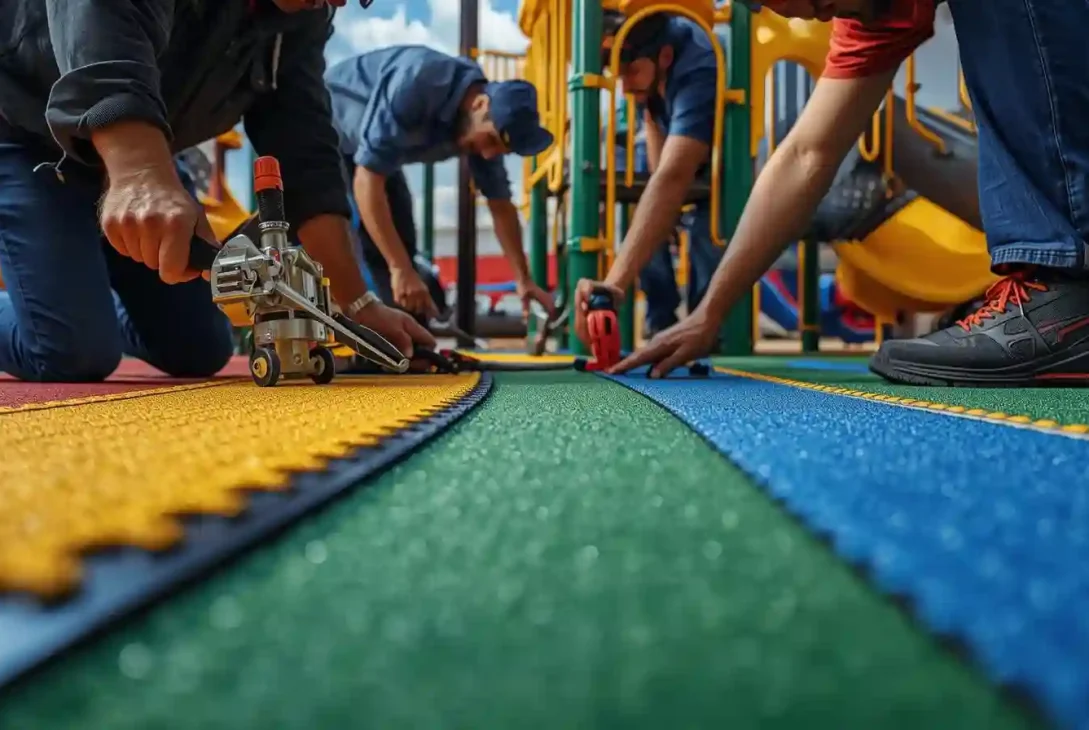
The Playground Surface Installation Process
Many people assume playground flooring simply involves placing tiles or pouring rubber on the ground. In reality, the installation process is much more detailed.
1. Site Evaluation
The process begins with analyzing soil conditions, slope, and drainage. This helps determine the most suitable surface system.
2. Base Preparation
A stable base layer is essential for long-term durability. The ground must be compacted and leveled before any surface materials are applied.
3. Surface Installation
The selected material—whether rubber tiles, poured rubber, or turf—is then installed according to precise specifications.
4. Final Inspection
After installation, the entire surface is inspected to ensure proper thickness, alignment, and safety performance.
Why Choose Professional Playground Flooring Installation Services
A safe playground starts with proper planning and expert installation. Professional installers understand how materials behave under different environmental conditions and how equipment layout influences safety.
Reliable installers focus on:
- Correct base preparation
- Accurate thickness for fall zones
- High-quality materials
- Proper curing and bonding processes
These details are essential for creating surfaces that remain safe and durable for years.
Our approach to playground safety and installation methods can be explored at https://zestoplay.com/. Playground Flooring Installation Services.
FAQ: Playground Flooring
1. What is the safest type of playground flooring?
Impact-absorbing surfaces such as rubber flooring or poured-in-place rubber are considered among the safest options because they cushion falls and reduce injury risk.
2. How long does playground flooring last?
High-quality playground surfaces can last 8–15 years depending on material type, usage levels, and maintenance practices.
3. Is rubber playground flooring better than tiles or concrete?
Yes. Rubber surfaces provide shock absorption and slip resistance, which hard surfaces like concrete or tiles cannot offer.
4. Does playground flooring require maintenance?
Most modern playground surfaces require minimal maintenance, though periodic inspections and cleaning help extend their lifespan.
5. Can playground flooring be installed on any ground surface?
Not always. Proper site preparation and base construction are necessary to ensure the flooring remains stable and safe over time. Playground Flooring Installation Services .