We didn’t wake up one day and decide to sell indoor play equipment because it sounded like a good business idea. It came from watching kids climb dining chairs, jump off sofas, and turn every corner of the house into a risky experiment. It came from parents telling us the same story again and again—“We bought something online, it looked great, but it didn’t last… or worse, it didn’t feel safe.”
That’s where ZestoPlay started. Not with big promises, but with a simple question: what would indoor play look like if it actually respected real homes and real families?
Indoor Play Equipment for Kids shouldn’t feel like clutter, noise, or another thing to worry about. It should quietly support movement, curiosity, and confidence—without parents hovering every second or rearranging their entire life around it.
Benefits of Indoor Play Equipment for Kids
Indoor play isn’t a backup plan anymore. For many families, it’s part of everyday life—especially in apartments, smaller homes, or places where outdoor play isn’t always possible. But the benefits only show up when the equipment actually works in real conditions.
We’ve learned that parents aren’t chasing “fun.” They’re chasing reliability. Something that keeps kids engaged without being overstimulating. Something that doesn’t fall apart after a few months. Something that lets kids move freely while parents breathe a little easier.
Good indoor play equipment does a lot quietly. It channels energy instead of fighting it. It gives kids ownership over their movement. And over time, it changes how a home feels—less tension, more flow.
Why Indoor Play Equipment for Kids Is Important for Physical Development
Kids don’t build strength by being told to “sit still.” They build it by climbing, pulling, balancing, and sometimes falling—safely. These movements aren’t extras; they’re foundational.
When indoor play is thoughtfully designed, physical development happens naturally, without instruction or pressure.
Improves balance, strength, and coordination
You can spot it slowly. A child who used to hesitate now climbs without fear. A toddler who stumbled constantly finds their footing. These changes don’t happen overnight, and they don’t come from flashy features. They come from repetition and confidence.
Indoor play equipment for home allows kids to repeat movements daily. Not in a structured way, but in the way kids naturally learn—trying, failing, adjusting, and trying again.
Encourages daily active play at home
The biggest challenge isn’t getting kids to move—it’s getting them to move consistently. When equipment is easy to access, not too loud, and not overwhelming, kids return to it on their own terms.
That’s when movement becomes part of the day, not a scheduled activity.
Mental and Social Benefits of Indoor Play Equipment for Kids
Physical benefits are easy to see. Mental and social benefits tend to sneak up on you.
We’ve seen parents surprised by how indoor play changes behavior—not because kids are “tired out,” but because their need for movement is finally being met.
Boosts creativity and problem-solving skills
Overdesigned toys tell kids exactly how to play. Simple indoor play equipment does the opposite—it leaves space.
A climbing frame becomes a ship one day, a fort the next. A tunnel turns into a hiding spot. These small acts of imagination matter. They build flexibility in thinking, patience, and problem-solving without anyone calling it “learning.”
Supports independent and group play indoors
Some days kids want space. Other days they want connection. Good indoor play equipment allows for both without constant adult involvement.
It supports solo play without isolation, and group play without chaos. That balance is harder to design than it sounds—but it’s where real value lives.
Types of Indoor Play Equipment for Kids by Zesto Play
No two homes are the same. No two kids are the same. We design with that messiness in mind.
Instead of forcing families to adapt to the equipment, we design equipment that adapts to families—across ages, spaces, and stages of development.
Indoor Play Equipment for Kids: Toddler-Friendly Options
Toddlers are fearless and uncoordinated at the same time. That combination demands serious respect.
Indoor play equipment for toddlers isn’t about challenge—it’s about safe exploration.
Soft play sets and foam climbers
Soft play isn’t “less serious” play. It’s essential for early movement. Foam climbers allow toddlers to fall without fear, explore height gradually, and develop body awareness in a controlled way.
Parents often tell us this is where they finally stop flinching every time their child climbs.
Mini slides and crawling tunnels
Low height. Wide steps. Stable bases. These details matter more than design trends.
Mini slides and tunnels give toddlers a sense of independence without putting them in situations they’re not ready for yet.
Indoor Play Equipment for Kids for Preschool and Older Children
As kids grow, they crave challenge—but not danger.
We design indoor equipment that grows with them, so parents aren’t forced to replace everything every year.
Indoor climbing frames and play gyms
Climbing frames build strength, coordination, and confidence—but only when they’re stable and well-balanced.
Our focus is on structures that support active play without shaking floors, stressing walls, or demanding constant supervision.
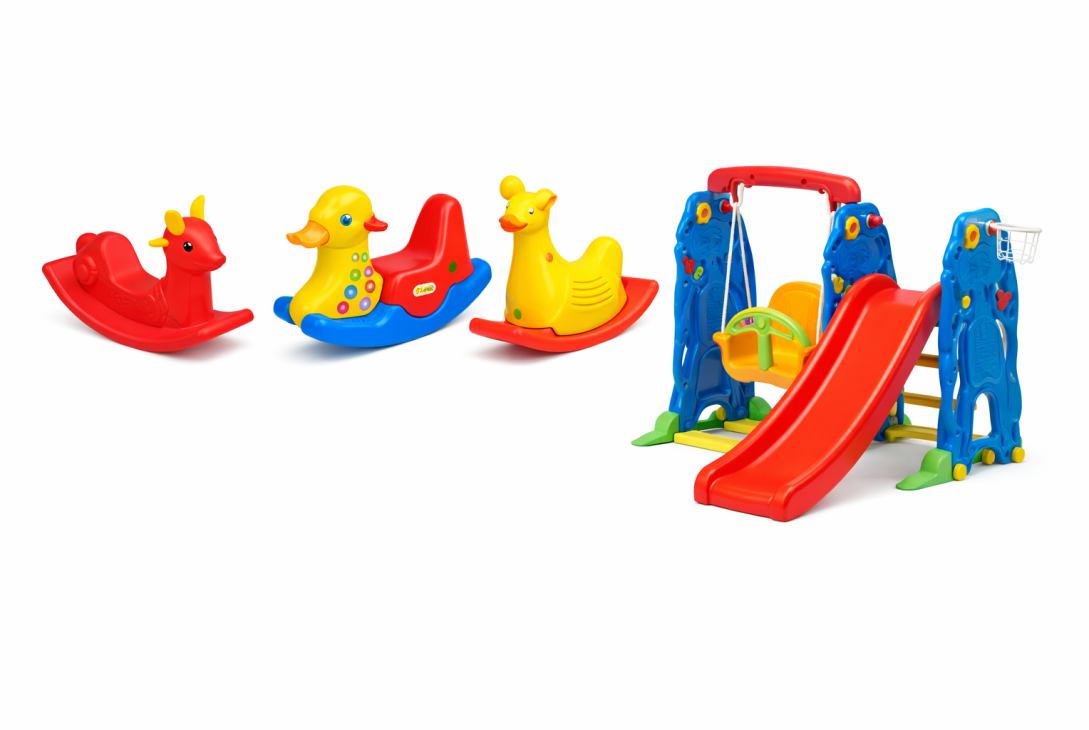
Swings and multi-activity indoor sets
Swings indoors can be tricky. Noise, motion, and stability all matter.
That’s why our designs prioritize controlled movement—enough to release energy, not enough to overwhelm shared spaces or siblings.
Indoor Play Equipment for Kids for Small Spaces
Most families don’t have playrooms. Pretending otherwise doesn’t help anyone.
Indoor play equipment for home must respect space—or it becomes unused.
Foldable and compact indoor play equipment
Foldability isn’t a luxury; it’s a necessity. Parents need the freedom to reset their space without dismantling their life.
Compact designs allow play to happen without permanently taking over the room.
Space-saving solutions for apartments
Apartment living comes with limits—noise, storage, shared walls.
We design equipment that works within those limits, not against them.
How to Choose Safe Indoor Play Equipment for Kids
If you’ve been disappointed before, you’re not being difficult—you’re being informed.
Safe indoor play equipment isn’t defined by labels or buzzwords. It’s defined by how it behaves when kids use it daily.
Safety Features to Look for in Indoor Play Equipment for Kids
Kids test equipment in ways adults never imagine. Safety has to hold up under real use.
Non-toxic materials and rounded edges
Toddlers chew. Kids bump into things. Sharp corners and questionable finishes aren’t small risks—they’re daily ones.
We choose materials assuming kids will interact with them fully, not carefully.
Stable design and anti-slip bases
If equipment shifts under weight, it creates fear—for both kids and parents.
Stability isn’t optional. It’s the foundation of confident play.
Why Zesto Play Is a Trusted Brand for Indoor Play Equipment for Kids
Trust isn’t built through slogans. It’s built through consistency.
We listen to feedback, especially complaints. We test products the way kids actually use them. And we design for long-term use, not quick wins.
High-quality materials and safety certifications
Certifications matter—but they’re just the starting line.
We go beyond minimum requirements because kids don’t play at minimum intensity.
Easy setup, durability, and parent-approved designs
If a product is frustrating to assemble or doesn’t last, it doesn’t belong in your home.
Parents don’t need more work. They need solutions.
Indoor Play Equipment for Kids: Long-Term Value Over Short-Term Hype
We don’t promise that indoor play equipment will make parenting easy. Nothing does.
What we do promise is thoughtful design, honest materials, and equipment that respects your space and your child’s development.
Indoor Play Equipment for Kids should feel like a quiet partner in your home—supporting movement, confidence, and safety without demanding attention.
That’s what we build at ZestoPlay. Not because it sounds good, but because families deserve better than disappointment.