Planning a playground sounds simple until you actually start speaking to vendors. Most schools, builders, and contractors who approach us have already been through one difficult experience — delayed delivery, unclear quotations, or equipment that looked good on paper but didn’t last a year. We’ve had principals call us after paint started peeling within months. Builders asking why anchors loosened so quickly. Facility managers trying to find spare parts from suppliers who stopped responding.
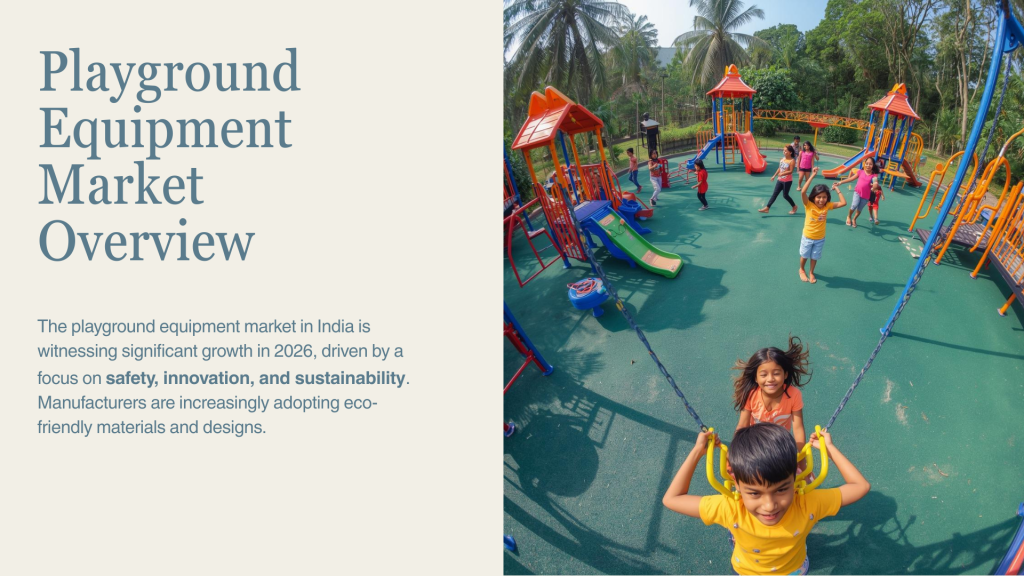
Over the years, we’ve realised people aren’t just searching for options anymore. They’re searching for reliability. As one of the experienced playground equipment manufacturers, we spend more time explaining materials, installation, and maintenance than pushing catalogues. Because once equipment is installed, it becomes a daily-use structure — not a decorative item.
This 2026 guide on Top Playground Equipment Manufacturers in India is based on real project experience across schools, parks, townships, and institutions. We’ll walk through materials, pricing clarity, safety certifications, installation realities, and long-term maintenance. Not in a brochure tone. Just the way we discuss things during actual client meetings. If you’re investing in a playground this year, it’s better to have clarity now than regrets later.
Why Choosing the Right Playground Equipment Manufacturer Matters
Selecting from the many Top Playground Equipment Manufacturers in India is rarely about choosing the most attractive design. It’s about choosing a partner who understands timelines, safety, and long-term durability.
We’ve worked with clients who initially selected vendors purely based on price. The quotation looked reasonable. But once the project started, hidden costs surfaced — transport extra, installation outsourced, coating downgraded. In some cases, equipment arrived weeks late, delaying school openings or park handovers.
The right manufacturer doesn’t just supply structures. They plan layouts according to usage, suggest materials suitable for local weather, and provide clear installation schedules. For example, a school playground experiences daily heavy use. A township park sees evening peak usage. Public parks face rougher handling. Each requires different structural planning.
Reliability also shows in documentation. Clear material specifications, defined warranty terms, and transparent pricing prevent confusion later. When everything is written and explained upfront, projects run smoother.
Choosing carefully at the start saves far more time and money than fixing problems later. That’s something most experienced buyers eventually realise.
Different Types of Playground Equipment Available in India
Understanding the available types of playground equipment helps buyers plan realistically instead of selecting randomly from catalogues.
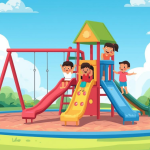
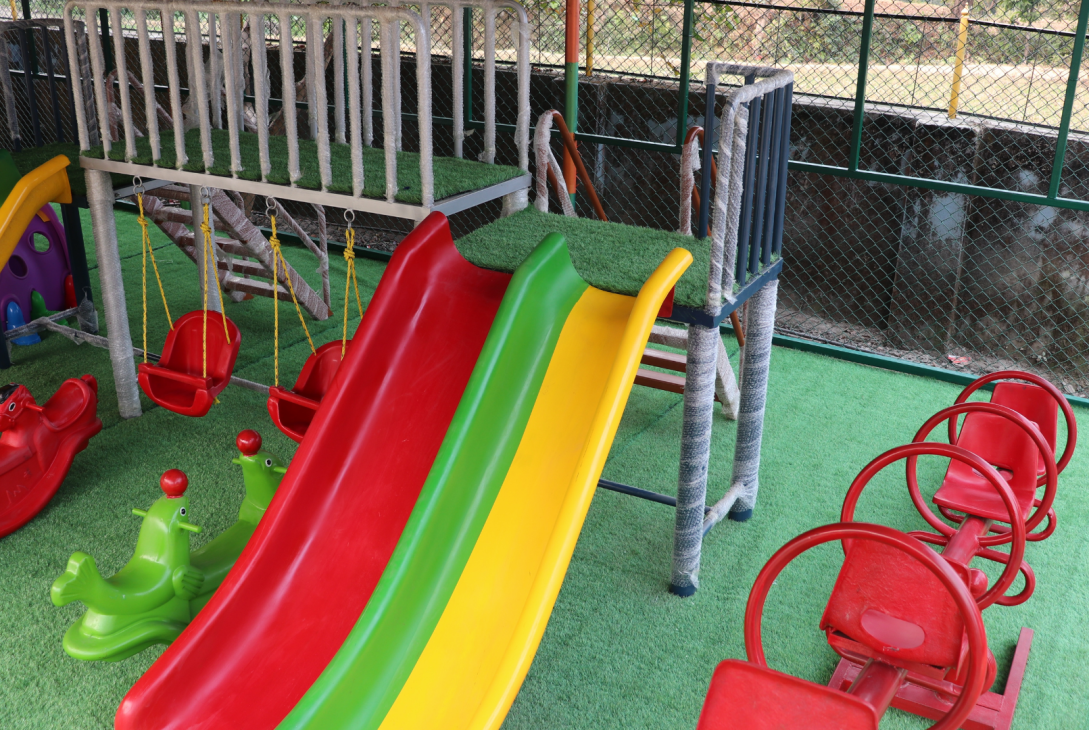
Multi-play stations remain the most common choice. These include slides, climbers, tunnels, and activity panels combined into one structure. They maximise engagement without requiring large space. Schools and housing societies prefer them because they serve multiple age groups.
Standalone equipment still plays an important role. Swings, see-saws, spring riders, and merry-go-rounds are essential additions. Rope climbers and net structures are becoming popular in premium schools and townships. They add physical challenge and improve motor skills.
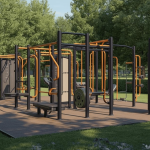
Public parks often include outdoor gym stations alongside children’s play areas. These attract older children and adults. Sensory panels and inclusive play equipment are also gaining attention in modern school designs.
The key is balance. Too many structures in limited space reduce safety and usability. We usually recommend starting with core equipment and expanding later once usage patterns become clear.
Best Playground Equipment for Schools and Educational Institutions
Selecting the best playground equipment for schools requires careful thought. It isn’t just about aesthetics. It’s about safety, durability, and usability across different age groups.
Pre-primary sections need low-height slides, activity panels, and soft-play elements. These encourage exploration without risk. Primary school children benefit from multi-play stations, swings, and basic climbing frames. Older students require more challenging equipment like rope climbers and fitness bars.
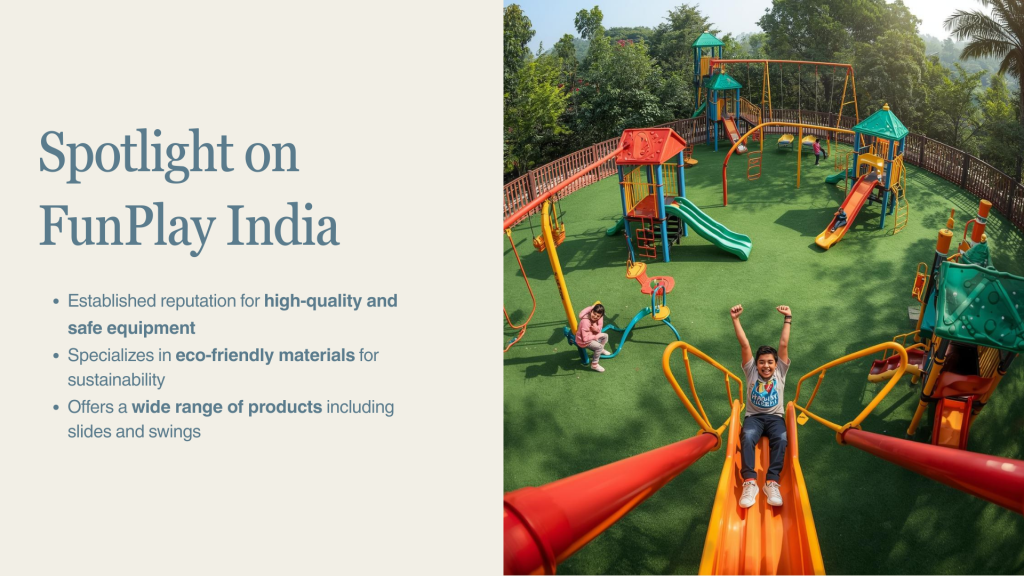
Spacing is critical. We’ve seen schools install too many units in small areas, leaving little fall space. This creates safety concerns and makes supervision difficult. A well-spaced playground often performs better than an overcrowded one.
Durability also matters because school playgrounds face daily heavy use. GI structures with proper thickness and LLDPE slides usually perform well. Powder coating protects against rust and reduces maintenance.
Visibility is another factor. Teachers prefer layouts where most equipment can be monitored from a central point. Good design supports supervision naturally.
When chosen carefully, school playground equipment lasts years with minimal issues.
Understanding the Cost of Playground Equipment in India
The cost of playground equipment is one of the first concerns for any institution. Unfortunately, it’s also where most confusion happens.
Prices vary based on materials, size, customization, transport distance, and installation complexity. A basic setup for a small school may start from a modest budget, while large township or park installations can be significantly higher.
Some suppliers provide attractive base pricing but exclude installation, freight, or foundation work. This leads to budget surprises later. We always recommend asking for item-wise quotations that include everything — equipment, transport, installation, and taxes.
Material quality directly affects cost. Thicker GI pipes, better powder coating, and high-grade LLDPE increase initial pricing but reduce long-term repair expenses. For public spaces, investing slightly more upfront often saves significant maintenance costs later.
Looking at lifespan instead of only purchase price helps make better decisions. A durable setup that lasts ten years is often more economical than a cheaper one requiring frequent repairs.
Safety Standards and Certifications You Should Never Ignore
Safety should never be treated as optional. Yet many buyers only ask about certifications after installation when inspections begin.
Reputable Top Playground Equipment Manufacturers in India usually follow ISI, ISO, ASTM, or EN safety guidelines where applicable. These standards cover structural strength, safe spacing, edge finishing, and material safety.
GI thickness plays a major role in structural stability. Thin pipes may reduce cost but compromise durability. Welding quality also affects long-term safety. Smooth edges and rounded corners prevent injuries.
Powder coating protects metal surfaces from rust and wear. Certified coating processes last longer and maintain smooth finishes.
Anchoring and foundation work are equally important. Even high-quality equipment can become unsafe if installation is rushed. Regular inspections and maintenance keep structures safe over years.
Safety isn’t a one-time checklist. It’s an ongoing responsibility.
Materials Used in Modern Outdoor Playground Equipment India
Material selection determines how well equipment performs in Indian weather conditions. Most modern playground setups combine GI steel, LLDPE plastic, and powder coating.
GI steel forms the main structure. Thickness generally ranges from 1.6mm to 3mm depending on equipment type. Heavier usage areas require thicker sections. Galvanization prevents rust and extends lifespan.
LLDPE plastic is commonly used for slides and panels. It resists UV damage and retains colour longer. Good molding ensures smooth edges and uniform thickness.
Powder coating protects metal from moisture and sunlight. Multi-layer coating lasts longer than single-layer finishes. In coastal areas, additional anti-rust treatment may be necessary.
Fasteners and connectors also matter. Stainless steel bolts and bearings reduce corrosion and maintenance. Small material details often determine long-term performance more than visible design elements.
Customization Options for Schools, Parks, and Townships
Customization allows playgrounds to fit real-world spaces instead of forcing standard layouts everywhere. Schools often request colour themes matching their campus. Townships may want toddler and senior play zones separated.
Inclusive features like ramps and sensory panels are increasingly requested. Some institutions prefer modular equipment that can expand later as budget allows.
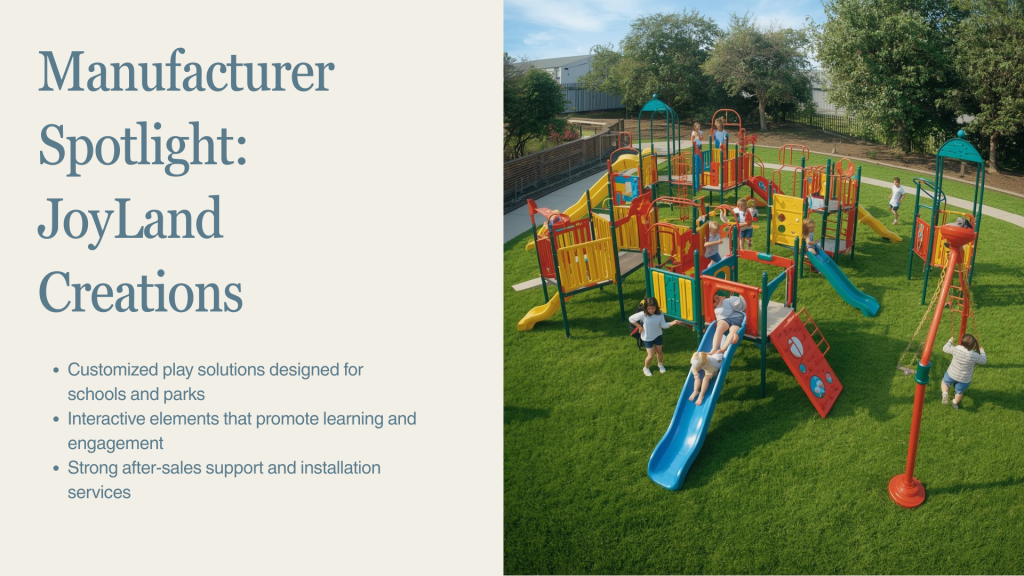
However, excessive customization can increase cost and timeline. We usually suggest balancing personalization with practicality. A well-planned standard layout often performs better than a heavily customized one.
Space utilization matters more than complex design. Proper circulation areas improve safety and usability.
When customization is done thoughtfully, playgrounds feel integrated with the overall environment rather than added as an afterthought.
Installation Process – What Actually Happens On-Site
Installation is where planning becomes reality. Proper groundwork ensures stability and longevity. We usually begin with site inspection to check soil condition, leveling, and measurements.
Foundation marking must be accurate. Excavation depth varies depending on equipment size. Concrete ratios and curing time affect strength. Rushing this stage often leads to future loosening.
After foundations set, structures are assembled and anchored. Slides and panels are attached later. Final alignment checks ensure stability.
Timelines vary. A small school playground may take a few days. Large park projects may require weeks. Weather can cause delays, especially during monsoon.
Clear coordination between supplier and client prevents confusion. When installation is planned properly, everything moves smoothly.
Maintenance, Warranty, and After-Sales Support
Maintenance determines how long equipment stays safe and functional. Regular tightening of nuts and bolts prevents structural issues. Bearings in swings and merry-go-rounds require periodic replacement.
Powder coating touch-ups may be needed after years of exposure. Slides should be checked for cracks or sharp edges.
Warranty terms vary across brands. Some cover structural components but exclude wear-and-tear parts. Understanding these details beforehand avoids disappointment.
Maintenance contracts are useful for large campuses and parks. Scheduled inspections reduce unexpected repairs.
Reliable after-sales support builds trust. When spare parts and service teams are accessible, playground lifespan increases significantly.
Common Mistakes Buyers Make (And How to Avoid Them)
Choosing purely based on price remains the biggest mistake. Low quotations often hide compromises in material quality or finishing.
Ignoring installation planning is another issue. Poor ground preparation affects stability.
Some buyers skip written specifications and rely on verbal assurances. Always request detailed documentation.
Overcrowding equipment reduces safety. Proper spacing should never be compromised.
Checking past projects and client feedback helps avoid unreliable suppliers. Visiting installed sites provides real insight.
How to Compare Playground Equipment Suppliers in India
When evaluating playground equipment suppliers in India, don’t rely only on catalogues. Look at material quality, installation capability, and support.
Ask about GI thickness, coating process, and plastic grade. Request references and visit completed sites.
Check whether installation is handled in-house or outsourced. This affects accountability.
Warranty clarity and spare availability also matter.
A transparent supplier answers technical questions confidently. That usually indicates reliability.
Top Playground Equipment Manufacturers and Brands in India
When discussing Top Playground Equipment Manufacturers in India, a few names consistently come up across school and infrastructure projects.
Zesto Play is widely recognised for durable structures and practical designs suited to Indian conditions. Many schools and residential projects prefer their balance of cost and quality.
KOMPAN is known globally for innovative designs and advanced materials. Their equipment often meets high international safety standards.
HAGS focuses on play value and child safety, offering diverse solutions for parks and institutions.
PlayCore specialises in customised playgrounds for educational and public spaces, particularly large projects.
Rainbow Play Systems is known for active play structures that promote physical engagement and movement.
Each brand has its strengths. Final selection depends on project needs, budget, and support availability.
Questions You Should Ask Before Placing an Order
Before finalising any supplier, ask a few essential questions:
- What GI thickness and coating process is used?
- Which safety standards are followed?
- Does the quotation include installation and transport?
- What is the delivery timeline?
- How does after-sales support work?
Clear answers reduce confusion and build confidence.
Final Thoughts
Choosing from the many Top Playground Equipment Manufacturers in India isn’t just about comparing prices. It’s about finding a partner who delivers consistency, safety, and long-term support.
A well-built playground becomes part of everyday life for children and communities. When planned carefully with quality materials and proper installation, it serves reliably for years.